

20 November 2026
Rzeszów
Poland 
Symphony Concert
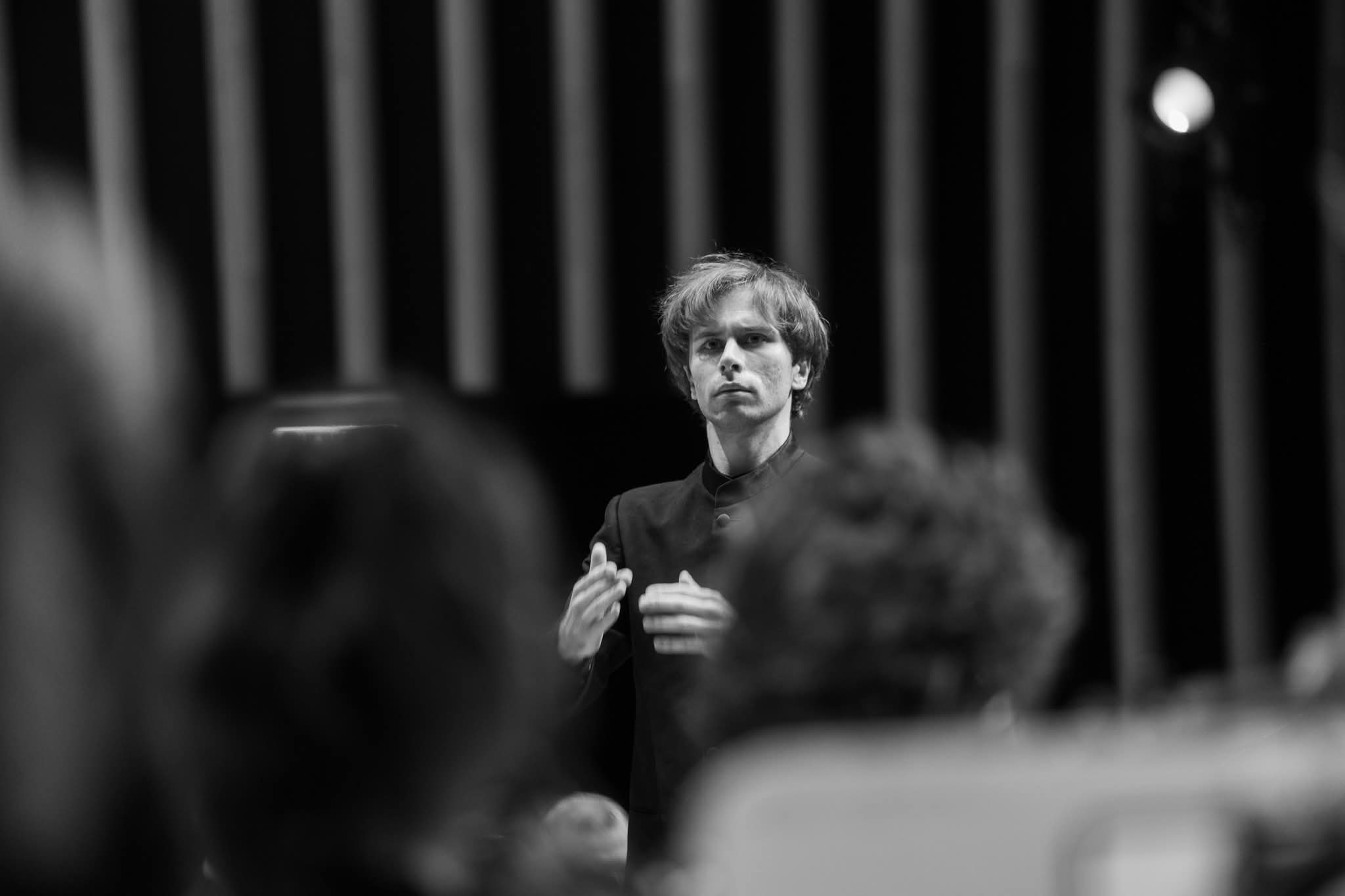
Orkiestra Symfoniczna Filharmonii Podkarpackiej conducted by Kacper Staniak - Sala Koncertowa Filharmonii Podkarpackiej
Program Info:
Symphony Orchestra Of The Podkarpackie Philharmonic
Kacper Staniak – Conductor
Carlos Peña Montoya – Harp
Juliusz Wesołowski – Harp
Artur Malawski's (1904–1957) Overture for Symphony Orchestra was written in 1949, during the most important and intense period of his career. By then, Malawski had already completed his compositional studies in Warsaw and had developed his own, original musical language. In it, he departed from the expressiveness of late Romanticism, basing his orchestral style on a radical synthesis of new rhythmic and coloristic techniques. Once unfairly underappreciated, the work of Artur Malawski, patron of the Podkarpackie Philharmonic, is enjoying increasing popularity today, and his music is gradually gaining its rightful place in the concert repertoire.
A real treat for music lovers will be the performance of Voyage – Concerto for Two Harps and Orchestra (2000) by Piotr Moss (born 1949). This one of the most esteemed contemporary Polish composers is a musical student of Grażyna Bacewicz, Piotr Perkowski, Krzysztof Penderecki, and Nadia Boulanger. Jonathan Woolf, music reviewer and author of a review of the Voyage recording, characterized the work as follows: "I find this piece quite cinematic. [Moss] has a gift for concisely conveying the atmosphere of a place. The harp solos are very demanding, also emphasizing timbre and color. There are also dance elements […]. Moss also likes to use a kind of orchestral cry, reminiscent of slapstick […]. Piotr Moss is an excellent arranger […]. He wants to convey mood and emotion, and he succeeds in doing so very well" (translation provided by my own).
Wojciech Kilar (1932–2013) wrote Orawa for 15 string instruments in 1986. The work is considered part of the composer's so-called folk movement, reflecting his fascination with the Tatra Mountains and the music of Podhale. Kilar draws on Podhale folklore, the extraordinary exuberance of which is reflected in the distinctive rhythms and original melodic patterns of Orawa. Another distinguishing feature of the piece is its "aggressive buildup"—the composer gradually increases the tempo and intensity of the musical narrative, constantly maintaining the tension that leads to a grand climax and spectacular finale.
The final performance will be the Suite from Wojciech Kilar's "Dracula." In 1992, American director Francis Ford Coppola, captivated by Kilar's score for Andrzej Wajda's "The Promised Land," invited the composer to collaborate on Dracula (incidentally, Kilar considered Coppola's "The Godfather" the greatest film in cinematic history). The Suite's Gothic atmosphere reveals another facet of Kilar's work and confirms the extraordinary versatility of his compositional language.
On the program:
Artur Malawski – Overture for Symphony Orchestra
Piotr. Moss – Voyage – Concerto for Two Harps and Orchestra
Wojciec Kilar – Orawa
Wojciec Kilar – Movie suite Dracula
External links:
Last edited: 17 August 2026 - 09:47 hours